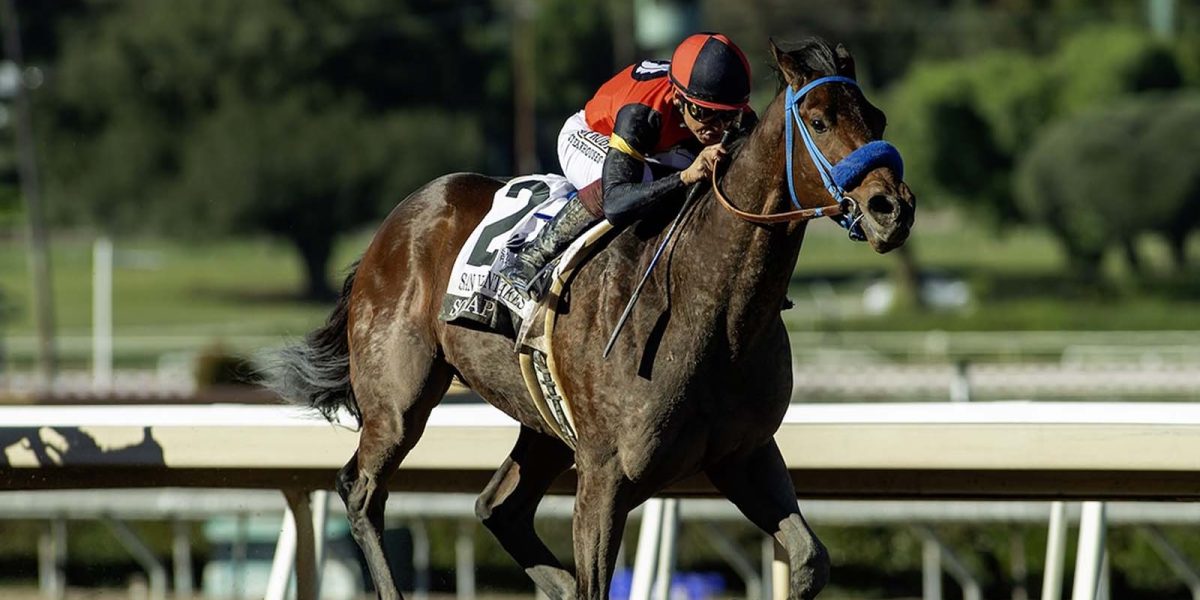
On Wednesday morning we wrote that So Happy at 6-1 was the wrong horse from the right post for this Derby pace setup. We called him a trap pick. That call was based on the line movement we were seeing then, the projected pace fight, and the structural problems with stalkers in fields with multiple early-speed types.
Two days later, the line on So Happy has settled around 6-1 from a high of 15-1 on Tuesday. The Mike Smith story has gotten louder. The Mark Glatt human interest angle has reached every major outlet. The public money continues to flow toward this horse. And the question for bettors is no longer whether the line is moving; it is whether anything else has changed.
Here is the honest update. Some things have changed. Some things have not. Whether So Happy is still a trap depends on which factors you weight most.
What Has Changed Since Wednesday
The trainer story is now the biggest narrative in the field, and that matters for the public money. Saturday will be Mark Glatt’s debut as a Kentucky Derby trainer. It will also come barely two months after the sudden death of his wife Dena, who suffered a cardiac arrest at age 57 in early March. The couple had been together for a quarter century. Dena’s death came in the weeks leading up to So Happy’s Santa Anita Derby effort on April 4, and Glatt’s tearful reaction in the winner’s circle that day, when he credited his late wife for getting the colt to that point, has circulated through every major racing outlet covering this Derby week.
This story has emotional weight that goes beyond handicapping. Bettors who would not normally play a 6-1 horse from post 8 are betting So Happy because they want the story to end well. That is real. That is also exactly why the line moved from 15-1 to 6-1 in 24 hours. The market is pricing the narrative, not just the form.
The Smith angle has also intensified. He is the oldest active rider in the elite tier of American jockeys at age 60, the all-time leader in Derby starts with 28 prior mounts, and a two-time winner of the race himself. His first Derby trophy came in 2005 aboard Giacomo, a 50-1 longshot who shocked the favorites. His second came thirteen years later on Justify, the horse who would go on to sweep the Triple Crown that year. A win Saturday gives Smith something he does not currently have, which is the record for oldest jockey ever to win the Kentucky Derby. The current holder of that mark is Bill Shoemaker, who took Ferdinand to the wire in 1986 at age 54. Smith would break the mark by six years. He has also ridden So Happy in every one of the colt’s four career starts, which is the kind of partnership that matters in a 20-horse field where trip and timing are everything.
CBS Sports flagged this directly in their piece on So Happy: “the combination of Glatt’s story, Smith and a catchy name could lead to So Happy being an underlay in the odds.” Underlay is a handicapping term for a horse whose odds are shorter than its actual win probability justifies. CBS is saying the same thing we said Wednesday in different words. The market is pricing the story, not the horse.
What Has Not Changed
The structural concerns that made us call So Happy a trap are still in place.
The pace setup still favors closers, not stalkers. Multiple horses in this field have early speed (Pavlovian, Six Speed, Potente, Danon Bourbon, and So Happy himself). When that many horses fight for early position, the half-mile fractions tend to run fast. Fast early fractions burn out the speed types and leave the closers with energy in the lane. So Happy at his Santa Anita Derby best is a tactical stalker who can rate behind speed and run them down. That works when the speed in front of him collapses. It does not work as well when the speed in front of him includes horses who can carry their pace longer.
The distance question is real. So Happy is by Runhappy, who built his reputation on speed at sprint distances and never proved himself past a one-turn route. The progeny coming out of that sire line have rarely stretched beyond nine furlongs with success. So Happy himself has tried 1 1/8 miles exactly once, in the Santa Anita Derby on April 4 that punched his ticket to Churchill Downs. Saturday’s race goes a full quarter-mile farther than that, at 1 1/4 miles, and it is the longest distance any of the horses in the field has been asked to run. The bloodlines argue against the trip, and the Santa Anita win at the shorter distance does not erase that concern.
The trip from post 8 is workable but not advantageous. Post 8 has produced winners in Derby history but is not in the historically strong post 5 or post 10 zones, and it is not in the 13-to-16 range that has produced nine of the last fifteen winners. So Happy will need a clean break and a clean trip to put his stalking style to use. With 19 other horses in the gate, clean breaks are not guaranteed.
The price is now wrong for the probability. At 15-1 on Tuesday, So Happy was a value play. The story was already in place. The form was already there. The price had not yet caught up. At 6-1 on Friday, the price has run past the probability. Whether So Happy wins or loses, the bet at 6-1 has worse expected value than the bet at 15-1 had. The horse is the same. The market has changed.
How to Update the Wednesday Call
The Wednesday call was that So Happy was the wrong horse from the right post for this pace setup. Two days later, that call still holds on the structural analysis. The horse’s profile has not changed. The pace projection has not changed. The distance question has not changed. What has changed is the price, and the price has only moved against the bettor.
If you were going to bet So Happy on Wednesday at the line we were seeing then, the bet was defensible at 15-1 because the value was there. At 6-1 the value has been priced out. Whatever upside existed in the longer line has been transferred to the bettors who got there first.
For bettors building tickets Friday afternoon and Saturday morning, the recommendation is the same as it was Wednesday but for slightly different reasons. So Happy is fine to use underneath in superfectas and trifectas because his finishing speed in a contested pace is real. He is wrong on top of tickets at 6-1 because the price does not match the probability and the structural concerns about distance and pace still apply. For more on how to construct exotic tickets at different bankroll levels, our guide on $20, $50, and $100 Derby tickets walks through specific structures.
The Trap We Were Calling
The original “trap pick” framing on Wednesday was about retail bettors who would see a 6-1 California horse with a Hall of Fame jockey and bet him to win because the story was easy to follow. That trap has now been sprung in real time. Tens of thousands of casual bettors have piled onto So Happy this week, driving the line from 15-1 to 6-1 in 24 hours. Every dollar of that movement makes the bet worse for the next dollar that gets bet.
The bettors most likely to cash a So Happy ticket Saturday are the ones who got him at 12-1 or 15-1 on Tuesday. Bettors arriving Friday or Saturday at 6-1 are paying the premium for a story that has been fully absorbed by the market. If So Happy wins, the bettors who paid 6-1 will collect a payout that is barely above the show price for the favorite. The risk-reward has been flattened.
This is what an underlay looks like in real time. The horse’s actual win probability has not changed. The amount the bet pays if it wins has dropped by more than half. The bettor who gets in late is buying narrative at handicapping prices.
What This Means for Saturday
Three practical recommendations come out of the analysis, though they shake out differently depending on when you got into the bet.
For exotic tickets, So Happy belongs in the second and third positions of trifectas and superfectas. His tactical speed is real and Mike Smith’s experience navigating Derby trips is unmatched in the field. The structural concerns argue against using him on top, but underneath he is genuinely live to hit the board.
If you bought So Happy at 12-1 or higher earlier this week, hold the ticket. The price has worsened against you in pari-mutuel terms, since your collected payout will be lower than what the morning line suggested. But the win probability has not changed. Selling out at this point accomplishes nothing useful.
For bettors looking at So Happy now at 6-1 on Friday or Saturday morning, the value is gone. Consider the longshots we covered earlier in the week (Wonder Dean, Right to Party, Potente) for win bets. Our coverage of the live longshots in winning post positions walks through the case for each one. So Happy can stay in your exotic tickets if you want exposure to the story, but betting him to win at 6-1 is paying narrative prices for handicapping value that is no longer there.
The Mike Smith record-breaking angle and the Mark Glatt human interest story are real and significant. They deserve to be acknowledged in any honest coverage of this Derby. They are not, however, reasons to bet a horse at 6-1 when the underlying handicapping case argues for a longer price.
Post time for the 2026 Kentucky Derby is 6:57 p.m. ET on Saturday, May 2 at Churchill Downs. The line movement is mostly settled. The story is mostly written. What remains is the race itself, which always has the final say. Need a place to bet? Our recommended racebooks at Legal Derby Betting cover the legal options for placing your wager.
Must be 18 or older. Terms apply.

Gambling should be fun. If it stops being fun, free and confidential help is available 24 hours a day at 1-800-GAMBLER. Visit our responsible gambling page for self-exclusion options.