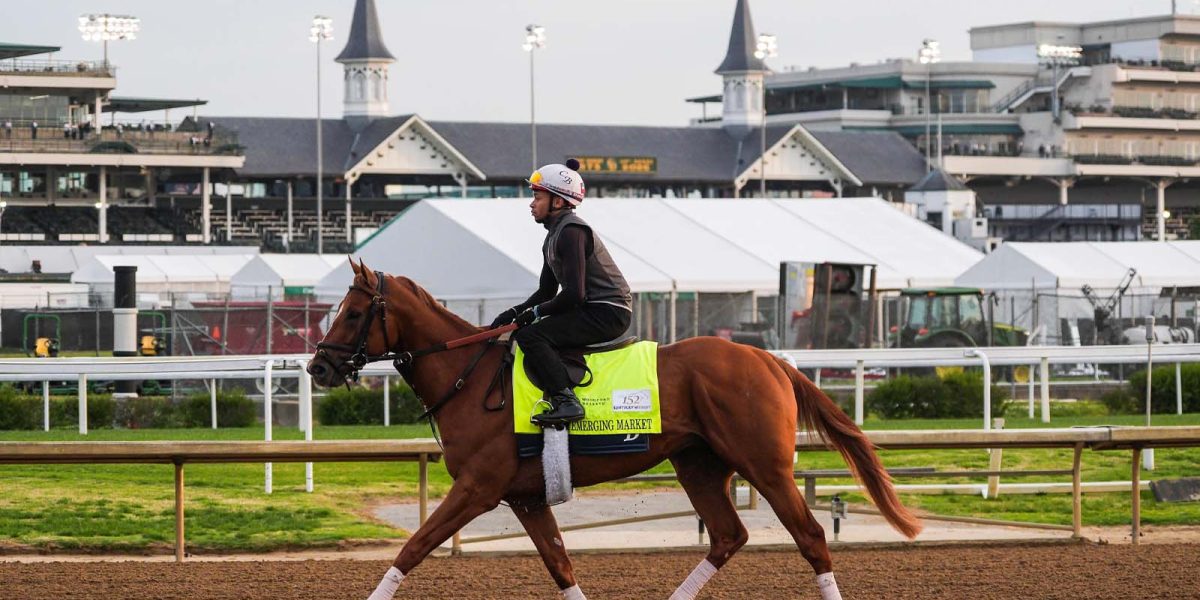
If you have followed horse racing on social media at any point in the last 12 months, you have seen the complaints. Bettor places a wager at 6-1 with two minutes to post. Watches the odds drop to 7-2 in the final 30 seconds. Wonders what just happened. The answer has a name: Computer-Assisted Wagering. The industry calls it CAW. The syndicates running it move roughly one third of all the money bet on American horse racing every year, and their last-second betting cycles routinely crush the odds that regular bettors thought they were locking in.
Then there is the Kentucky Derby. The race that draws $234 million in handle in a single afternoon. The race where, for one day a year, the algorithms become a rounding error. If you are a casual bettor placing a Saturday Derby ticket and you have heard about CAW and decided to skip betting because of it, this is the article that tells you why you can stop worrying.
What CAW Actually Is
CAW stands for Computer-Assisted Wagering. The plain-English version: groups of professional gamblers, usually operating from offshore tax havens, run algorithms that model every horse race in real time. They have direct data feeds from the tote system, rebate deals with tracks and ADW platforms that retail bettors cannot access, and the technical infrastructure to upload thousands of bets in the final seconds before a race goes off.
Two individual CAW players each wager roughly $1 billion per year on US racing alone, according to a Financial Times estimate. The total CAW share of the American horse racing handle is approaching $4 billion annually, per a class-action lawsuit filed in October 2025 by the Hagens Berman law firm. That suit alleges the major tracks and ADW platforms have effectively rigged the pari-mutuel pools by giving CAW operators preferential access, and that the system “destroys value for retail bettors.”
The complaint may or may not succeed in court. The underlying mechanics are not in dispute. CAW operators get rebates of 8 to 12 percent on every dollar they bet. They get tote feeds that are faster and more granular than what shows up on your screen. They place their bets in the final seconds of the wagering window, after they have seen where every other dollar in the pool has gone. By the time you place a 5-1 win bet two minutes before post, the CAW platforms are calculating which horse to hammer to maximize their position. The 5-1 you saw becomes the 2-1 you collect. Your expected return just got cut by more than half.
This is not a conspiracy theory. The largest CAW platform, Elite Turf Club, is majority-owned by The Stronach Group, which also owns Santa Anita and Gulfstream Park. The New York Racing Association runs its own CAW platform. Tracks know exactly who is doing this and why. The honest version of the explanation is that the casual bettor base has been shrinking for years, and CAW handle is the reason most tracks can still stay in business at all. Without CAW money, the sport’s economics break.
That is the bigger picture. Now here is the part that matters for Saturday.
Why the Derby Is Different
Pari-mutuel pools work on percentages. CAW influence on a given race depends entirely on how big a slice of the pool the syndicates control. On a regular Tuesday at a mid-tier track, a single race might draw $300,000 into the win pool. A CAW platform dumping $50,000 in the final 30 seconds moves the odds dramatically because that $50,000 represents roughly 17 percent of the entire pool.
The 2026 Kentucky Derby is going to draw something north of $234 million in total wagering. The win pool alone will be in the tens of millions. A CAW operator placing a $500,000 bet, which would dominate a Tuesday afternoon at Aqueduct, represents a tiny fraction of the Derby win pool. That is not enough to move the odds in any meaningful way.
Yahoo Sports’ Dan Wolken made this exact point in his Tuesday investigation of the CAW issue. His framing was direct: the Derby’s massive handle dilutes CAW influence “to the point of being imperceptible.” A regular bettor placing a $50 win ticket on Renegade at 5-1 with 90 seconds to post is going to collect at very close to 5-1 if the horse wins. The CAW platforms cannot move a $40 million pool the way they move a $300,000 pool. The math does not work.
That is true for the win, place and show pools. It is also largely true for the major exotic pools. The Derby trifecta and superfecta pools each draw tens of millions of dollars on race day. These are the deepest betting pools the sport produces all year. They are also the most CAW-resistant.
The Pools Where You Should Still Be Cautious
There are two exceptions worth knowing about, and they apply on Derby day too.
The first is the small carryover and exotic pools that some bettors play for the big payouts. Pick 6 carryovers, late doubles, exotic combinations across multiple races. These pools can be much smaller than the headline Derby win pool, even on Derby day, and CAW influence on the closing odds can be more pronounced. If you are betting a $1 Pick 4 at 6:50 p.m. ET on Saturday and the carryover pool is sitting at $400,000, your last-minute odds calculation may not reflect what you actually collect.
The second is the simulcast races on the Derby undercard. Churchill Downs runs a full Saturday card, and the early races have much smaller pools than the big race itself. A bettor who arrives early and starts placing exotic tickets on the 1:00 p.m. race is dealing with the same CAW dynamics that exist on a regular Saturday at any track. The Derby Day exception applies primarily to the Derby itself and the major undercard pools.
If you are betting only the Kentucky Derby and only the standard wager types on the main race, the CAW issue does not apply to you in any practical sense.
Why You Are Hearing About This Now
Two things came together in the past 12 months. First, the Hagens Berman lawsuit gave the industry’s frustrations a legal vehicle. Second, the rise of social media discussion among horse players turned what used to be an inside-baseball complaint into a public conversation. Barstool Sports founder Dave Portnoy, an avid horse owner, has publicly cut his betting volume because of CAW concerns. So have a number of professional handicappers.
The result is that 2026 may be the first year a meaningful share of casual Derby bettors hear about CAW before placing their first ticket. Some of them will conclude the game is rigged and skip betting entirely. That conclusion is wrong on Derby day specifically, even if it has merit on a random Wednesday at Tampa Bay Downs.
The pari-mutuel system, including its CAW problem, has real structural issues that the industry needs to address. New York has started doing it by implementing earlier cutoff times that prevent the worst of the last-second CAW floods. Hong Kong shows final odds to all bettors before the wagering window closes. Most US tracks have not adopted either reform. The Hagens Berman lawsuit may force some of these changes whether the industry wants them or not.
But none of that has any practical bearing on whether you should place a Derby ticket Saturday. The size of the pool is the protection. The Derby is the day where the casual bettor and the algorithm syndicate are betting into the same numbers, because the pool is too big for either of them to materially affect.
What This Means for Your Saturday
Bet the Derby. Bet it through whatever platform makes sense for you. Whether you are placing a ticket through TwinSpires, FanDuel Racing, Bovada, BetOnline, or in person at a simulcast facility, the odds you see in the final minutes of the betting window are very close to the odds you will actually collect on a winning ticket. The 5-1 horse will pay roughly 5-1. The 30-1 longshot will pay roughly 30-1. The CAW platforms cannot move the Derby pool meaningfully because the pool is just too large.
The pieces of advice that genuinely matter for Saturday are the ones we have covered all week. Get your account funded before Derby day, because verification queues run long on the day itself. Build your tickets around the pace setup, which favors closers in this field. Use the live longshots in your exotic constructions because the structural value is in the longshots, not in the favorites. The CAW story is real, important, and worth understanding for the rest of the racing year. It is not a reason to skip your Derby bet on Saturday.
Post time for the 2026 Kentucky Derby is 6:57 p.m. ET on Saturday, May 2 at Churchill Downs. The pool will set itself. Need help finding a platform to bet through? Our recommended racebooks at Legal Derby Betting cover the legal options for every type of bettor.
Must be 18 or older. Terms apply.

Gambling should be fun. If it stops being fun, free and confidential help is available 24 hours a day at 1-800-GAMBLER. Visit our responsible gambling page for self-exclusion options.