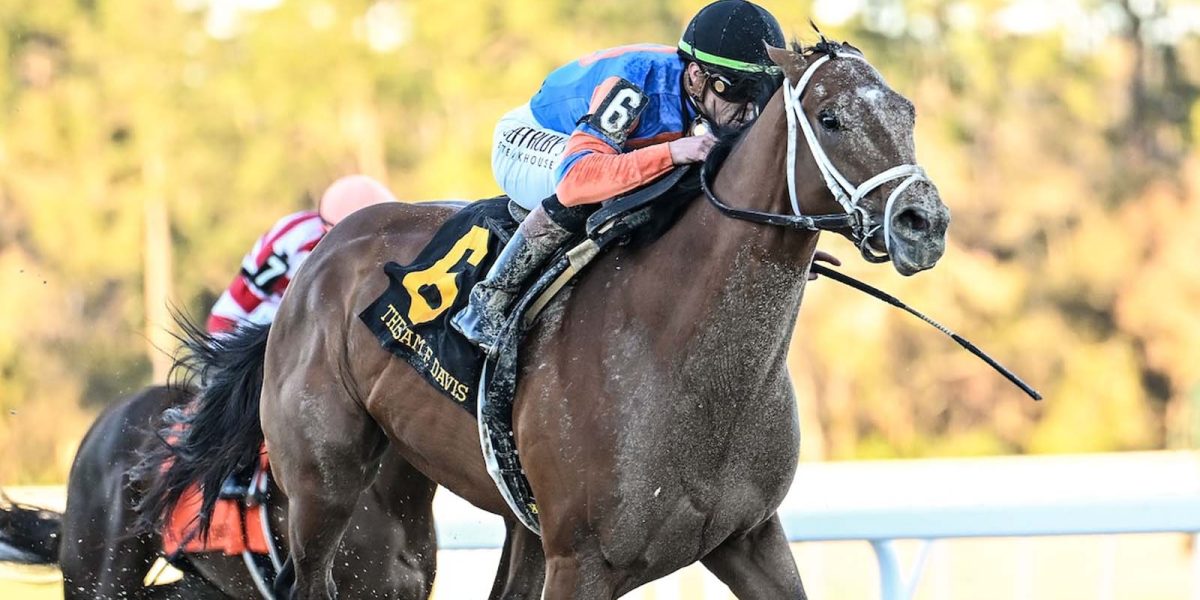
The 2026 Kentucky Derby morning-line favorite drew the worst post position in the race. Renegade, 4-1, will break from gate 1, the rail, a post that has not produced a Derby winner since Ferdinand in 1986. Three of the top four market choices in fact landed in historically poor gates. Renegade in 1, Commandment in 6 and Further Ado in 18.
This is the part where most outlets are telling you to fade Renegade and look elsewhere. I am telling you the opposite. The rail problem is real but it is also the most overstated of the three negatives stacked against him, and once you understand why, the question of how to bet the 2026 Kentucky Derby gets a lot more interesting.
Here is the case in plain language. The rail is a death sentence for a horse that needs early position. It is a manageable problem for a horse that only needs to be running through horses in the lane. Renegade is the second kind of horse, and the pace setup of this Derby is going to give him exactly the race he wants.
The Pace Picture Decides the Race
The 2026 Kentucky Derby field includes at least four genuine speed horses competing for early position, which is the setup that has rewarded closers in each of the last four runnings of the race.
Six Speed comes in off a runner-up finish in the UAE Derby and has done nothing his entire career except go to the front. He drew post 17, which forces him to either commit hard early or hang wide. Either way he is sending. Pavlovian learned to run early when Doug O’Neill put blinkers on him and he is not going backward in the Kentucky Derby. So Happy possesses triple-digit early pace numbers and needs to be prominently placed. Potente showed high speed in the Santa Anita Derby. Danon Bourbon, the Japanese shipper, dominates with cruising speed up front.
That is at least four speed horses, possibly five, fighting for the same real estate. The fractions are going to be fast. Probably a half mile around 45 seconds, maybe quicker depending on how aggressively Six Speed gets sent.
Now look at what has happened the last four Derbies under exactly this kind of setup. In 2022 the field went the fastest opening quarter mile in race history and Rich Strike came from 18th to win at 80-1. In 2023, Mage sat 16th early and won at 15-1. In 2024 the four horses behind Mystik Dan were all deep closers. In 2025 the entire superfecta came out of the back of the field on a sloppy track and Sovereignty had two horses beaten with half a mile left before he won going away at 7-1.
Four straight Derbies have rewarded horses coming from off the pace because the early fractions kept burning out the speed. The 2026 field is built the same way. If you are working out a Kentucky Derby betting strategy this year and you do not have late runners on your tickets, you are betting against the most consistent pattern this race has produced in the modern era.
Where the Rail Actually Matters
The rail hurts horses who need to fight for early position. Renegade does not need that fight. His Arkansas Derby win came from last of eight, behind slow fractions, with a four-wide closing kick that covered his final furlong in 11.84 seconds. His Beyer Speed Figures across his last five starts have run 57, 87, 82, 93, 98. That is a steady upward trajectory, not a one-race fluke. The kind of run that does not require a clean early trip. It requires room in the lane and horses to pass.
Irad Ortiz Jr. is going to settle him. Ortiz is too smart to gun a deep closer out of the rail and waste him in the first quarter. The Mo Donegal trip in 2022, Ortiz’s last rail mount in the Derby, was a settle-and-save-ground ride that finished fifth. That is a perfectly survivable result for a horse with Mo Donegal’s late kick on a day when the pace was not as fast as 2026’s projects to be.
The legitimate worry is traffic. Twenty horses converging on the rail leaves the inside horses bumped, shuffled or buried. Renegade has to be sharp enough out of the gate to stay clear of the worst of it, and Ortiz has to read the traffic correctly when he asks. Neither is guaranteed. But it is one risk, not three, and it is the risk that comes with every closer in every Derby field.
The Real Negatives on Renegade
Two factors concern me more than the rail draw itself. The first is jockey Irad Ortiz Jr.’s Kentucky Derby record. The second is owner Mike Repole’s.
Ortiz is a five-time Eclipse Award winner as the nation’s best jockey. He is also 0-for-9 in the Kentucky Derby, with a best finish of fourth. That is a brutal record for a rider of his quality, and it is hard to know how much is bad luck and how much is something specific to this race that does not suit him. Either way, a jockey who has never finished better than fourth in nine Derby tries is not where you want your money on a horse that already has structural problems.
Mike Repole is 0-for-8 in the Kentucky Derby. Two of his would-be favorites, Uncle Mo and Forte, did not make it to the gate. There is no analytical mechanism that explains why an owner’s record should matter. There is also a 0-for-8. At some point coincidence becomes data, and Repole’s Derby data is awful.
Stack those against the rail and the field strength and Renegade’s true win probability is materially lower than the 4-1 morning line implies. My read is that he is closer to 6-1 or 7-1 if he were priced honestly. That has implications for how you build your tickets.
How to Actually Bet Renegade
Three approaches to handling Renegade are defensible. One is wrong.
The wrong approach is keying him on top of your Kentucky Derby exotics at his current price. If 4-1 is shorter than his true odds, putting him on top of trifectas and superfectas means you are paying for the privilege of being on the wrong side of the value. The public is going to hammer him into the 7-2 or 3-1 range by post time. You do not want to be there.
The first defensible approach is using him second or third in exotics rather than on top. This is the play for bettors who think he hits the board but do not love him to win. A trifecta with two or three legitimate win candidates on top, Renegade in second and third, and three or four spread horses underneath gives you broad coverage at a reasonable price and protects you against exactly the result this rail draw most likely produces, which is a third-place finish from a horse who closed strongly but ran out of ground.
The second defensible approach is keying him on top anyway, but doing it cheap. A 50-cent or 10-cent ticket structure means you are paying to be wrong with a smaller invoice if the rail buries him. If he wins, the payouts are still meaningful because the public will be on him too but the rail draw will keep the price from collapsing entirely.
The third defensible approach is fading him entirely and using the value elsewhere. The longshots in this field are sitting in better posts than the favorite. If you believe the pace scenario sets up for closers and you do not believe Renegade is the only closer who can take advantage, the fade is rational. I would not call it the highest-conviction play but it is not wrong either.
Sample Ticket Constructions for the 2026 Kentucky Derby
Here are three Kentucky Derby ticket structures at three budgets, sized for actual bettors rather than industry pros. Combinations and costs reflect standard pari-mutuel pricing and assume no scratches affect the field. If you are new to building multi-horse exotic tickets, the structures below walk through how the math actually works.
The $12 Ticket
A 10-cent superfecta. Renegade and Further Ado in slots one and two, either order. Five horses in slots two through four: Commandment, The Puma, Wonder Dean, Chief Wallabee and So Happy. The structure produces 120 distinct combinations at 10 cents each, total cost $12. The ticket hits if either Renegade or Further Ado wins and any three of the second-tier horses fill the next three positions in any order.
The $40 Ticket
A $1 trifecta. Renegade and Further Ado in slot one, five horses in slots two and three: Commandment, The Puma, Wonder Dean, Chief Wallabee and So Happy. The structure produces 40 distinct combinations at $1 each, total cost $40. Same logic as the superfecta but cheaper because trifectas only require three horses in order. This is the better ticket if you think the race comes down to a familiar top three rather than a chaotic four-horse stretch run.
The $100 Ticket
Mix it. A $30 win bet on a longshot at 15-1 or higher. A $5 exacta box of three horses you think can win, six combinations at $5 each, total $30. A $1 trifecta partial wheel with Renegade and Further Ado on top, five horses in slots two and three, total $40. Combined cost $100 exactly. This is the bettor who wants exposure across multiple outcomes and is willing to pay for it.
What I Would Actually Do
If I am betting this race with my own money, I am keying Renegade in second and third in exotics, not on top. I am using The Puma at 10-1 and Wonder Dean at 30-1 as my live longshot adds underneath. I am skipping the win bet on Renegade entirely because the price is too short for the structural problems stacked against him.
The play is not to be brave or contrarian. The play is to recognize that the rail discount is too aggressive given the pace scenario, the Ortiz and Repole drag is real, and the smart way to handle a horse with that profile is to use him underneath at a price that does not punish you for being half right.
The horses to use with Renegade in exotics are the closers and stalkers who fit the same race shape. The horses to leave off are the speed types who are going to fight Six Speed and Pavlovian for the lead and come back to the field by the quarter pole.
If you are looking for longshot value plays in the 2026 Kentucky Derby, the historically strongest posts at Churchill Downs are occupied this year by horses at 15-1 or longer. Watch this section for our companion breakdown of the strong-post longshots in the field. You can also see the full list of 2026 Kentucky Derby contenders, odds and post positions here.
Post time is 6:57 p.m. ET on Saturday, May 2 at Churchill Downs. Have your accounts funded by Friday. The lines slow down on Derby day and you do not want to be troubleshooting a deposit while the horses load.
Must be 18 or older. Terms apply.

Gambling should be fun. If it stops being fun, free and confidential help is available 24 hours a day at 1-800-GAMBLER. Visit our responsible gambling page for self-exclusion options.